
Hypeventure's Journey (Series 01) - Episode 21: I'm moving to Substack!
Moving to Substack, what's happening?

It’s been a long time since the last episode for this diary, but I decided it was finally time for an upgrade. Google Blogspot seemed cool, but it still had issues that meant I couldn’t stay forever. For instance, links always embedded the date—which I couldn’t remove—and the homepage didn’t show all episodes. I also needed a platform that was easy to use, looked modern, and offered plenty of customizations. When I discovered Substack, it turned out it could do more than I ever expected. I knew I had to make the move.
How did I land here?
The way I discovered this platform was quite odd—so odd, in fact, that I had to pause and do some research while drafting this very episode. The journey began in Gareth Emery’s Discord Server, where he posted something like this:
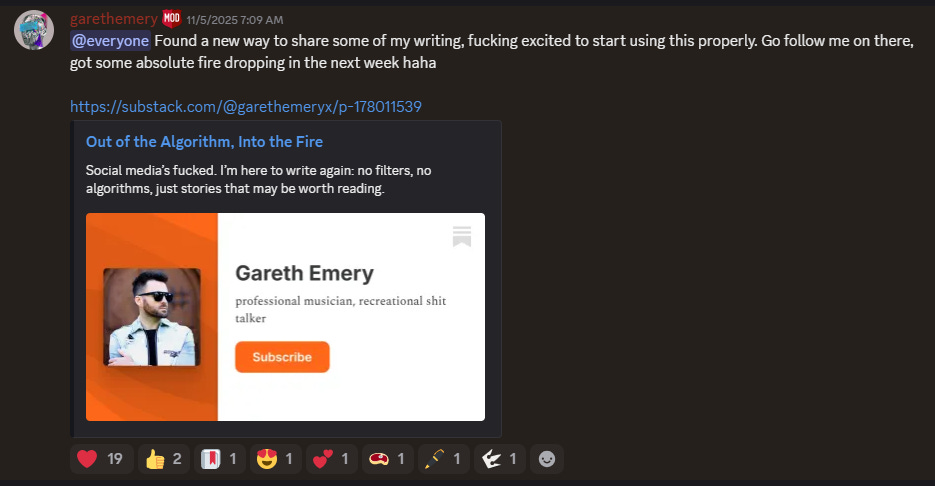
Seeing a musical artist publish blogs and articles is quite rare within the EDM scene. When he made that post, I immediately checked out the platform, and well... we have a lot to discuss here.
But before I go any further, I want to talk a bit about him first, because this guy is a legend. For anyone unfamiliar, Gareth Emery is a British DJ and producer who has become one of the most influential names in trance and electronic dance music. He’s known for a string of hit albums like Northern Lights, Drive, and 100 Reasons to Live and has produced anthems that have defined the genre for years.
I want to go a bit deeper into one track in particular, as it’s the one I knew best before discovering LSR/CTY: “Saving Light,” his collaboration with Standerwick featuring HALIENE, and released on Monstercat. This track is more than just a hit. It became a powerful anthem for the entire trance community. “Saving Light” famously reached the #1 spot on the Beatport overall chart and, in an unprecedented fan-driven campaign, was voted “Tune of the Year” on Armin van Buuren’s radio show named “A State of Trance”. More importantly, the track was tied to a powerful anti-bullying message, with all proceeds donated to the charity Ditch the Label. Its emotional depth and massive fan support cemented it as a modern classic.
Emery is also a world-class performer, renowned for his jaw-dropping live shows that incorporate cutting-edge visuals and laser design. This commitment to the live experience is what led him to his latest and perhaps most ambitious project.
And then, we got the Emery’s latest adventure, LSR/CITY (pronounced Laser City), is what I can only describe as the chaos of lasers. That isn’t just an alias. That Lazer City I mentioned, is unmistakably an immersive concert experience that combines music with an absolutely insane amount of synchronized laser displays and stunning 3D digital visuals. It began as a successor to his previous laser-focused tour, Laserface, which was already known for its advanced use of technology.
With LSR/CITY, Emery wanted to create a world where the sound and visuals exist in perfect synergy. He launched the project in 2021, not with a single or an album, but with a collection of NFTs (hate to break this up but I’m not a fan of those stuffs), each pairing original music with unique, laser-generated virtual environments.
Now, those items are there to set the stage. And then, the live shows. LSR/CITY tours have been described as a breathtaking, multi-sensory journey. And then his latest show, by far the one I remember the most: The LSR/CITY Cyberpunk Tour. The shows are a breathtaking, multi-sensory journey. Emery himself has called the production the “most insane lasers ever seen so far in dance music.” The Cyberpunk theme pits melody and emotion against the dark forces of AI in a dystopian world, with fans witnessing a blend of trance, progressive, techno, and even drum and bass, all surrounded by an electrifying and meticulously choreographed laser spectacle. The project has become a viral sensation, with clips of its stunning light shows spreading rapidly across social media.
Then, on November 5th, 2025, Emery made his first post on a platform called Substack. When it was shared in his Discord, the excitement was palpable. I checked it out myself and instantly understood the appeal—it confirmed that I wasn’t the only creator looking for a better way to connect. In his first post, Emery explained his move by describing platforms like Instagram and TikTok as “vapid, addictive distractions” or toxic spaces filled with bots and negativity. He felt that constantly feeding the content machine, especially with the pressure to “document everything,” was draining his artistic energy. He likened it to a magician revealing their trick before the show even begins, arguing that overexposure can ruin the listener’s imaginative experience and destroy the sense of mystery that makes art special.
His attraction to a platform like Substack became clear. Emery has always had a passion for long-form storytelling, dating back to his early tour diaries in 2003. He wants a place to share unfiltered thoughts without being manipulated by algorithms or reduced to bite-sized content, connecting with readers who are genuinely interested in depth over fleeting likes.
Reading his post, it all clicked. His reasons perfectly mirrored the purpose of “Hypeventure’s Journal Diary”. This diary has always been my own unfiltered space—the untold story of my life and my adventures. For a long time, I’ve shared almost everything here, something many public figures wouldn’t dare to do. It’s true to its name: a real diary where my life unfolds, showing how I became who I am today. It’s a sanctuary where I can document my struggles and frustrations without the constant fear of judgment or backlash.
And that’s exactly what a platform like Substack is for. And for the rest of this episode, I’m going to dive into what Substack is, what it can do, and why it’s the perfect new home for this diary. Let’s go.
Okay. What is this place?
At its core, Substack is an online platform that blends the best parts of a blog and an email newsletter into one simple package. For creators, it’s a space to publish articles, stories, and updates without needing any technical skills. The writing interface is clean and straightforward, but its real power lies in how it connects you with your audience. When you publish a post, it doesn’t just sit on a website; it gets delivered directly to the inbox of every person who subscribes. This direct connection is what sets Substack apart from social media. Instead of fighting against algorithms that decide who sees your work, you have a direct line to your readers. Crucially, you also own your audience. Your subscriber list belongs to you, and if you ever decide to leave, you can take that list with you—a level of control that platforms like Instagram or Twitter/X simply don’t offer.
Beyond just publishing, Substack also provides tools to build a genuine community. Features like comment sections and dedicated discussion threads allow for meaningful conversations around your work. It also has a “Notes” feature, which functions like a short-form feed, letting you share quick thoughts and interact with other writers and readers on the platform, pretty much Twitter and blogs platform on a same page. For creators like me and Gareth Emery, this model is a game-changer. It’s free to publish, and if you choose to, you can offer paid subscriptions for exclusive content. This allows readers to directly support the work they value. Substack’s business model is tied to the success of its writers, taking a 10% cut of paid subscription revenue. It’s a system designed to reward thoughtful, in-depth content and foster a loyal community, free from the noise and pressure of mainstream social platforms.
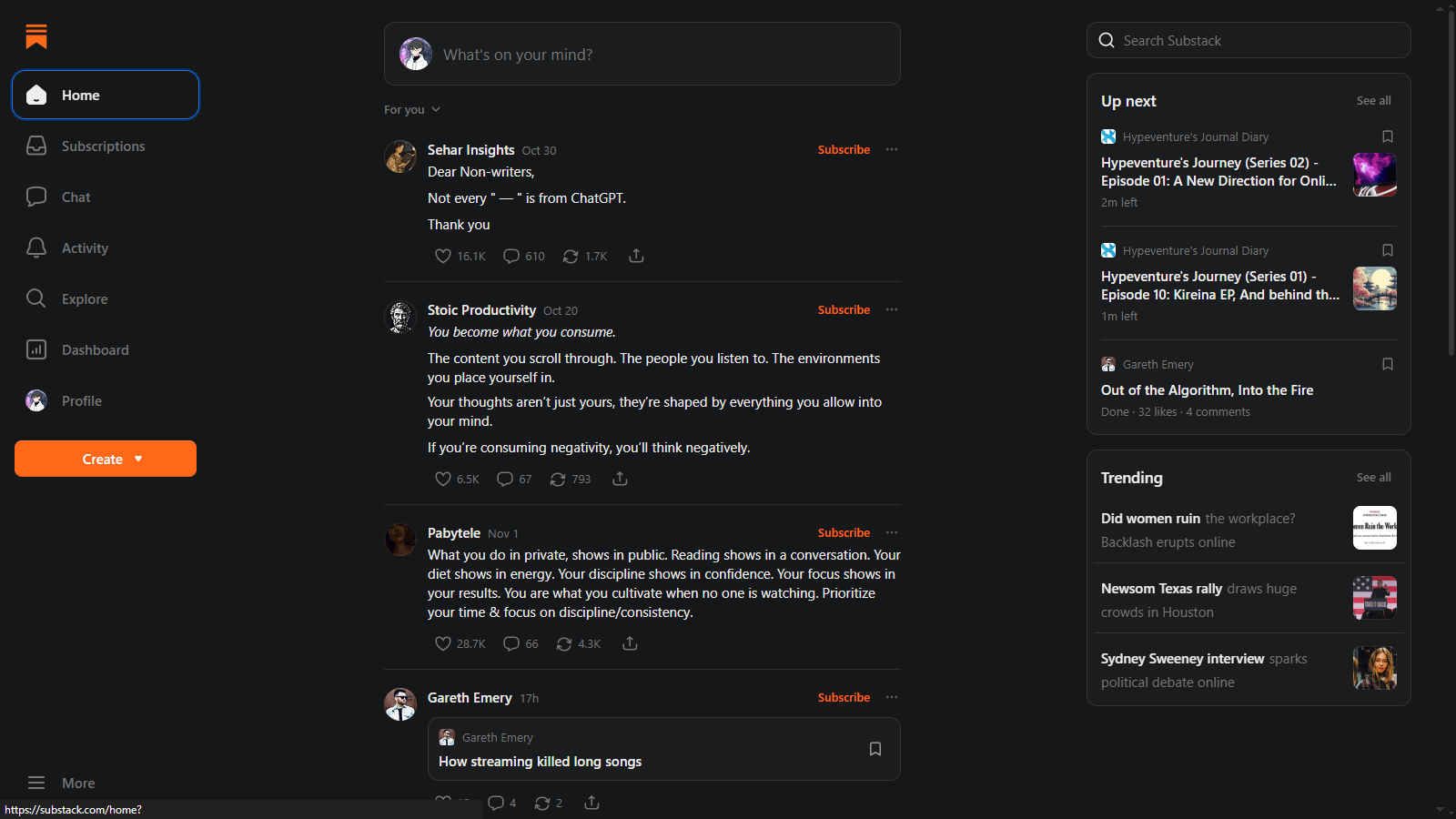
Here’s the interface, the first one you will see. At glance, this is pretty much Twitter in the nutshell, with a similar layout. Nothing much special here.
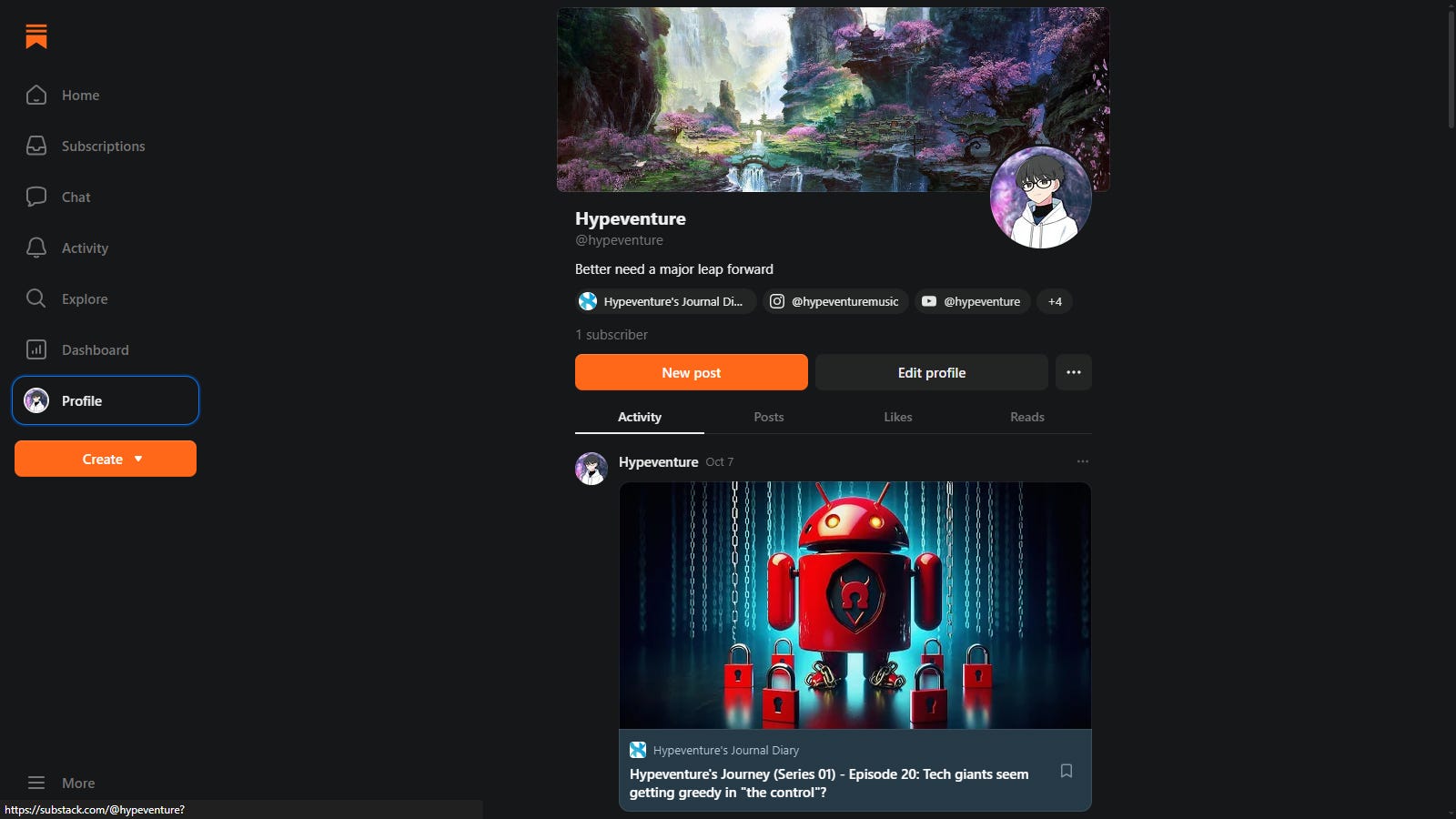
And here’s how a typical profile looks like, and there’s something Twitter (now X) can’t do. You can embed a social media links directly into your Substack profile, and it will show up as boxes like what we see here. They are simply buttons with logos that link directly to your other online profiles, like your Instagram, YouTube, personal website, etc. And it’s a quick way for visitors to your Substack page to find you on other platforms.
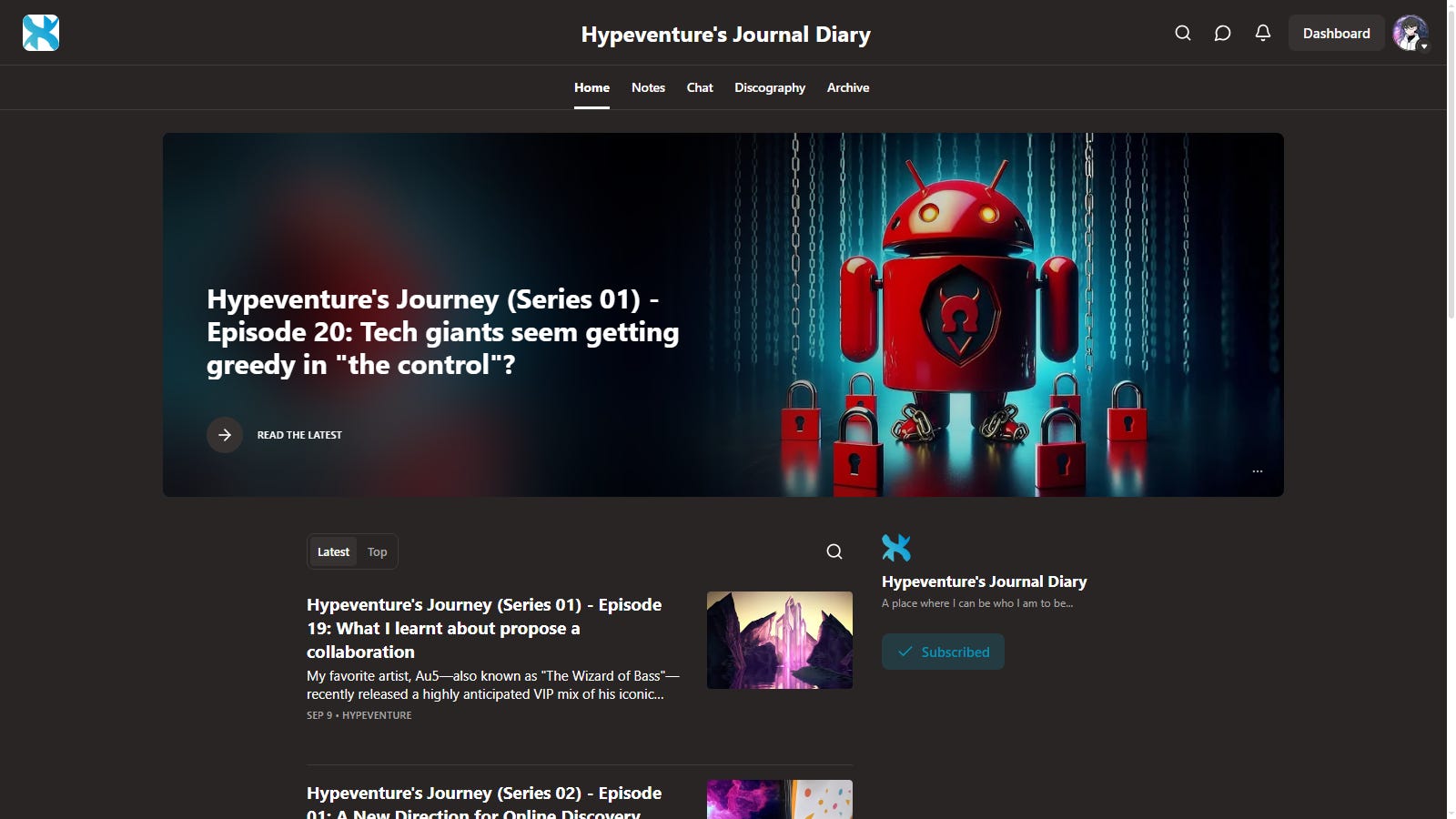
And then the main event: Posts. You are not just post something. You’re publishing. Think about it is like having your own YouTube channel, but for writing, with a level of customization that YouTube can’t offer.
On YouTube, your channel is your hub. On Substack, you get a “publication,” which is your dedicated, customizable home for your work. As you can see from my setup for this diary, I was able to create a polished homepage that looks and feels like a real website, with a custom banner, a featured article, and a clean layout for past episodes. This gives the diary a professional identity and makes it a true destination for readers, something far beyond a simple feed. And of course, you have sub links too.
While your publication is your polished storefront, Substack also gives you a personal profile page. This acts more like a traditional social feed, showing a chronological list of all your posts and activity. Pretty much a way for people to quickly see what you’ve been up to.
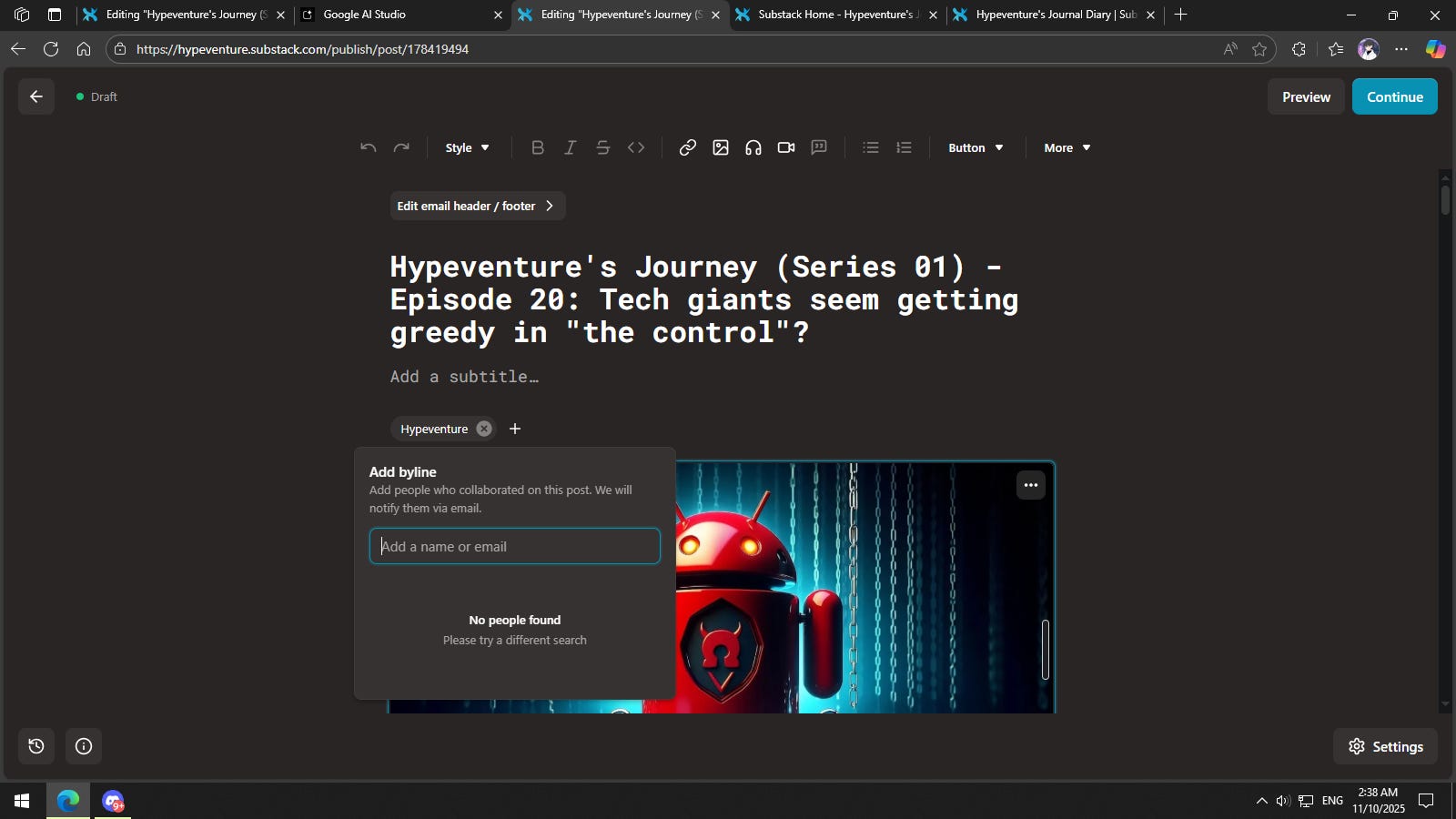
And alongside that, you have some more features. For example, byline, here you can add more than 1 contributor for an entry. So if you are writing together, you can add all of them here.
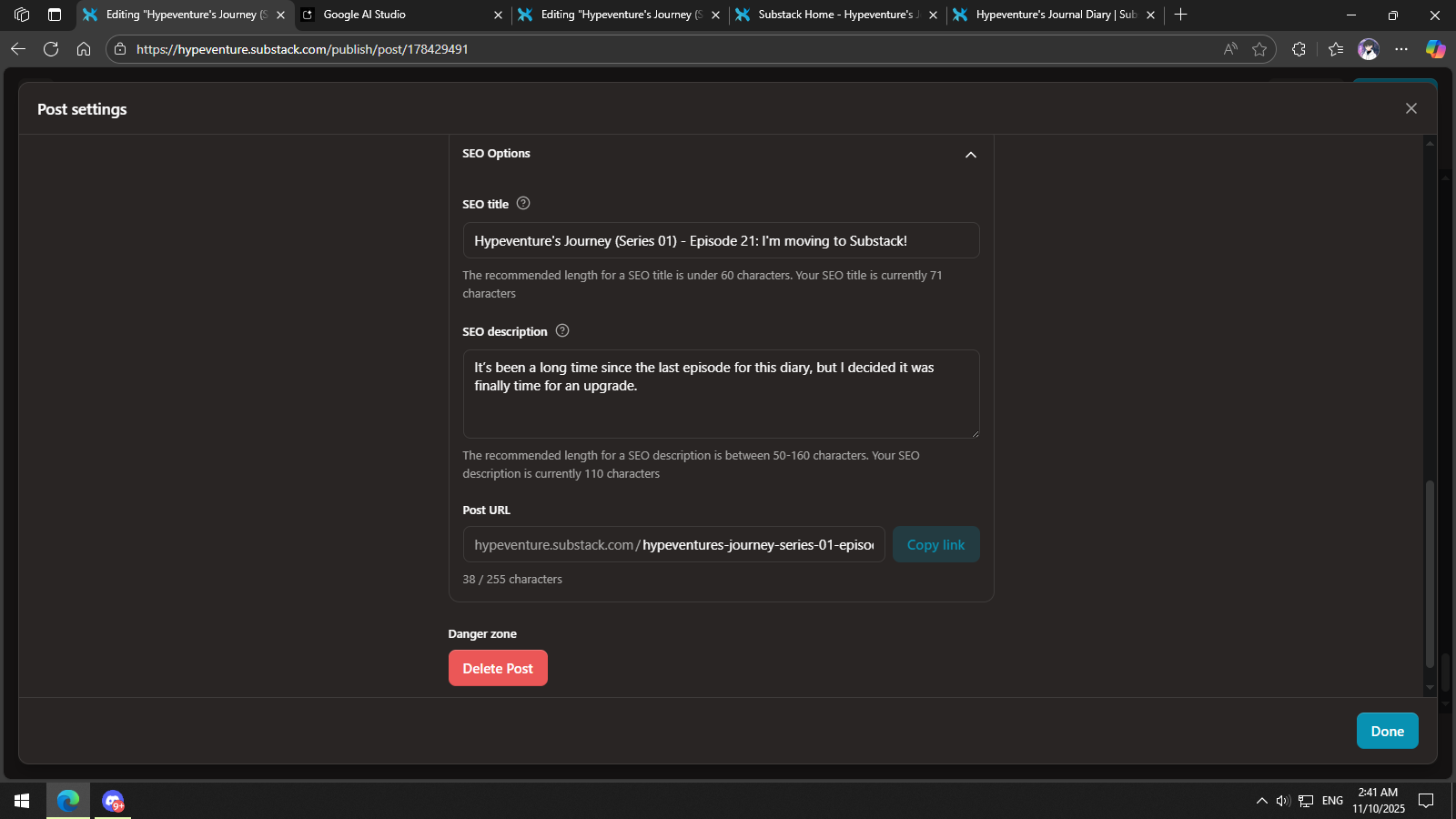
And then, there’s custom URLs. This might seem like a minor detail, but it’s a huge deal for me. On Blogger, I was always stuck with links that automatically embedded the date, creating long, messy URLs that were impossible for anyone to remember. It always felt unprofessional.
For Substack, it’s easier. You can find this in the Settings button, located on the bottom right when you are drafting an entry. Then head to SEO Settings, you can find an option to set the post link. And this one does not have a date. This is not just making links cleaner, but easier to sharing, and it’s also a big plus for SEO (Search Engine Optimization), helping people discover the diary more easily through search engines. Finally, no more dates in my URLs.
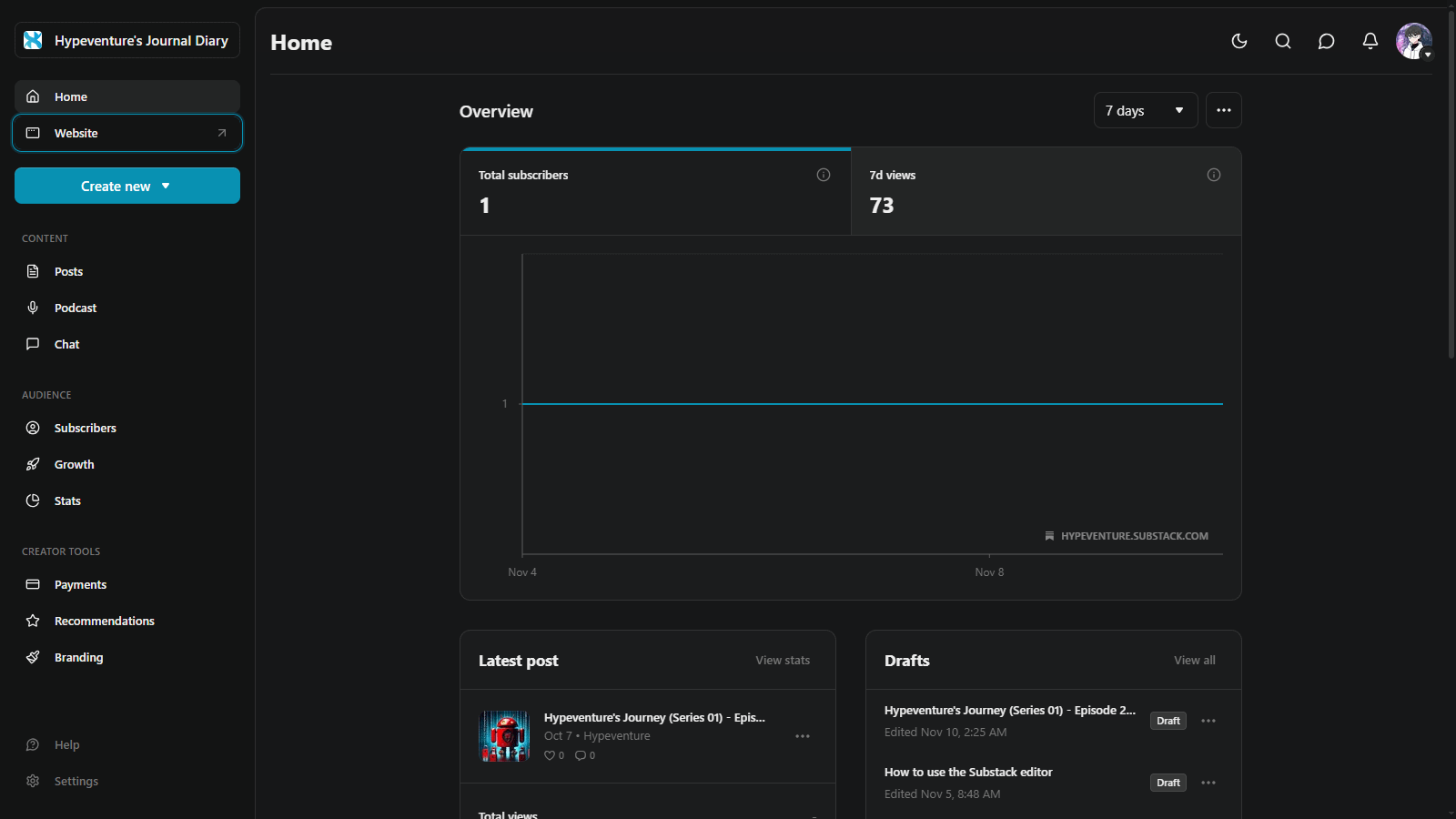
And of course, a dashboard. That one place that I can pretty much setup and seeing analytics. So if you mainly writing as a career, this one helps.
What Sets Substack Apart?
My favorite thing about Substack is the overall experience. This platform was designed purely for a writer’s comfort and focus. From the moment you start, you’ll notice a lack of technical complexities; a simple, welcoming walkthrough is all it takes to be ready to publish. It’s a socially driven platform, which makes controlling who sees your content straightforward. Unlike Blogger, Substack provides a direct path to turn your writing hobby into a potential career through its integrated paid subscription feature. Think of it this way: Imagine you’ve written a novel and want to be compensated for your work. Substack makes this possible. The platform does take a 10% commission on paid subscriptions, which is a fair trade-off for the income needed to sustain and develop its features. Best of all, there’s no hassle in setting this up; it’s a seamless, built-in function. Plus, the simplified URL system makes sharing your work incredibly easy.
Another of my favorite features is the ability to add collaborators using “Byline”. For a project that involves more than one writer, like a novel, I can easily credit them. Substack allows you to invite contributors to your publication and assign them different roles. For co-authors, you can add multiple writers to the byline of a single post, ensuring everyone who contributed gets the recognition they deserve. This is a fantastic tool for collaborative projects, making it simple to manage and properly attribute creative work.
Alongside “Posts”, Substack isn’t limited to long-form posts like diaries, novels, or news articles. The “Notes” feature, with its Twitter-inspired layout, offers something many writers crave: freedom from constraints. While some sources indicate no character limit, others suggest that Notes are best for short-form content, typically under 250 words, obviously you could go beyond if you wanted to. You can share your thoughts, attach up to six photos or GIFs, and engage with a community of readers and writers. This flexibility allows for a different kind of creativity and connection. So… freedom, indeed?
Conclusion
By uniting these powerful features on a single platform, Substack simplifies the writer’s life. There’s no need to switch between X (formerly Twitter) for short updates and a separate blogging platform for long-form content. You don’t have to struggle with complicated linking systems or technical hurdles to make things work the way you envision. You set it up once, and then your primary focus can be on what you do best: Writing.
For this reason, my future episodes will be exclusive to Substack, hopefully. I am more than ready to continue exploring and sharing everything this platform has to offer, alongside the other aspects of my journey. I’m wrapping this up for now. See you next time.
Couldn't agree more. Substack offers a much more robust framework for content creators. The freedom to customize and truly own your narrative is empowering. Its a smart upgrade, well done!